 |
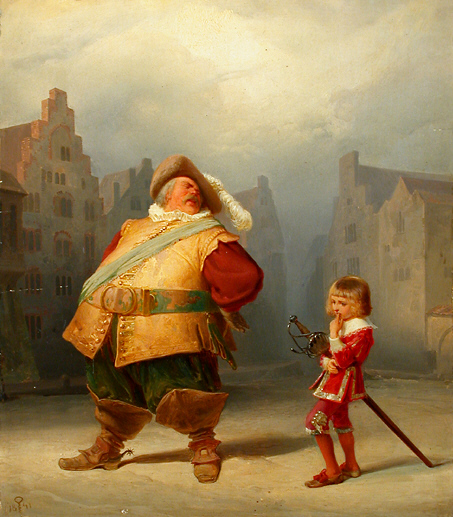
| Falstaff and Robin |
Showing posts with label Robin. Show all posts
Showing posts with label Robin. Show all posts
Friday, June 3, 2011
Robin, Simple and Rugby


Wednesday, June 1, 2011
Bardolph, Pistol and Nym
 |
| Falstaff, Nym, Pistol and Bardolph enter the Garter |
I often say that productions are only as strong as the ensemble, and while that is true, for this script, these three take on part of that focus. They each serve a different function for Falstaff and for the plot. If there isn't careful delineation between the three, all is lost for the entire production.
Friday, April 29, 2011
So...Who Are The Merry Wives of Windsor?
So let's dig right in and get to the cast breakdown.
Wednesday, April 27, 2011
How Do I Figure Out Who The Merry Wives of Windsor Are?
Then I tackle the big three: when, who and where. The answers to these three questions determine if it goes from a story I want to tell to a story I can tell.
While I normally start with "who", with Shakespeare "when" is the big factor. I try to find that hook that will help my audience get into the story and first see if the story can be set in modern times. I've set Two Gentlemen of Verona in a skate park, and Romeo and Juliet at a rave. I was all set to put Love's Labour's Lost in a fraternity house when I heard some Shakespeare purists in town were upset that I was always updating Shakespeare to the modern era. So I decided to show them, and I set it in the late 16th century and it was a mistake. The production had some glorious tech elements and some of the finest performances from my actors, but the audience had a visual hurdle they couldn't overcome in a single viewing.
"Where" is so closely tied to "when" and ideas do formulate right away within the second read, but first I have to determine if I have the personnel to do the show. And in order to do that, I have to know the job descriptions for each role. This does not mean that I cast the show this far in advance. I always wait until the auditions for that. Instead, I start doing what I call a breakdown of the script, so that I can get to know the characters better.
Tuesday, April 26, 2011
When is The Merry Wives of Windsor?
 When you consider the time of The Merry Wives of Windsor, there are really three things you are considering:
- The setting of the script;
- The time we are setting this production;
- The time the script was written.
Purists (oh, how I loathe them) cry fowl when directors update a Shakespeare script. They think that it is a bespoulment of the good works of a master. I would say to them The Lord Chamberlain's Men and The King's Men did the exact same thing during Shakespeare's time. They kept their actors in modern, Elizabethan dress, especially for the history plays. Why should we be any different?
Subscribe to:
Posts (Atom)